
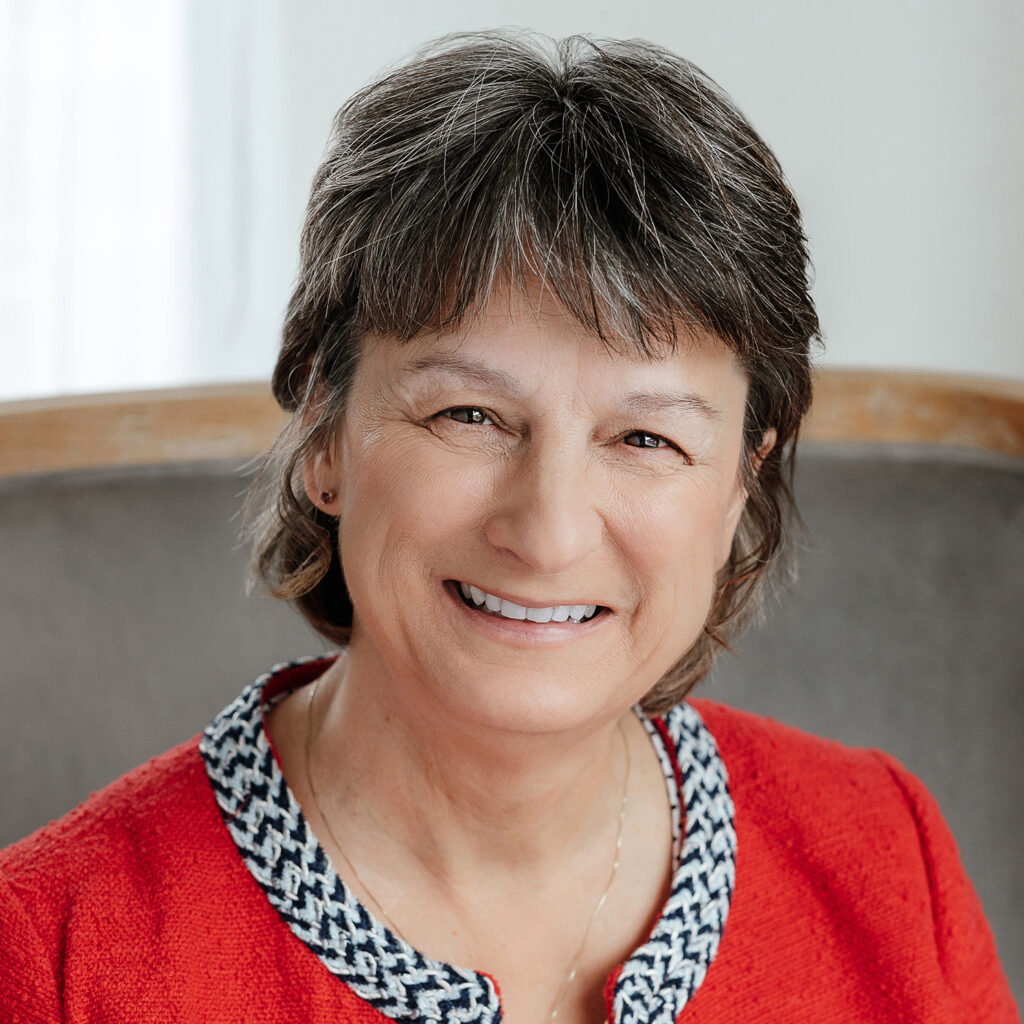
Marcia Thornton Jones and Debbie Dadey were faculty members at a Lexington private school in the late 1980s when they began talking one day about children’s books: what they liked, what they didn’t like and how they might like to write one someday.
“And then Marcia just said, ‘Well, why don’t we do it? Let’s start tomorrow,’ because that’s the way she is,” Dadey recalled.
While on lunch break the next day, they jotted down story ideas and made homework assignments for each other. Dadey was Sayre School’s school librarian and Jones was the computer lab teacher. Week after week, month after month, they collaborated on new stories, mailed them off to publishers — and got rejection slips.
“Our primary goal was to see our name on the cover of a book like the ones we liked to read to kids,” Jones said. “We came into this business not knowing a lot about it, and, to be honest, I think that was to our benefit, because we did not accept rejections as a ‘no’. We thought rejections were just a statement that it wasn’t good enough yet.”
After nearly two years of this, a representative from Scholastic, one of the nation’s largest publishers for young people, called the Sayre School library one day. The company wanted one of their manuscripts.
The novel Vampires Don’t Wear Polka Dots was published in 1990. In the years since then, Dadey and Jones have written and published about 100 books together, as well as dozens more books as solo writers. They estimate their books have sold about 46 million copies worldwide, making them among the most prolific and successful authors for young people.
Dadey, 66, was born in Morganfield and grew up in Henderson. She earned degrees in elementary education and library science from Western Kentucky University.
Most of their jointly written books are part of what became the Bailey School Kids series. The stories are about the adventures of kids who attend the Bailey School and encounter teachers and other adults who may or may not be mythical beings, such as vampires, werewolves or dragons.
Dadey and Jones first published novel was the result of a bad day at school.
“I’d been a teacher for many years, and usually the kids were great,” Jones said. “But I had a very bad day one day. Debbie came over to my classroom at lunch when we would write. She could tell I was upset and asked what was wrong. I said, ‘It’s been a horrible day, worst day ever. I guess I would have to grow 10 feet tall, sprout horns and blow smoke out my nose just for them to realize I’m the teacher. I’m in charge. They have to do what I say!’ I mean, I was really upset.
“But Debbie started to laugh and said, well, what if a teacher could do that? And so we sat down and started writing Vampires Don’t Wear Polka Dots simply as a joke to make me feel better. We wrote about a teacher who was indeed a monster who could grow 10 feet tall, sprout horns and blow smoke out her nose. It took us two weeks. We had a blast writing it. And when we were finished with it, we thought, we’ve got a book.”
They had noticed how much kids like books with elements of fantasy and the supernatural. “Kids really like to read about monsters, and it’s both of our passions to reach kids who maybe didn’t like to read.” Dadey said. “As a librarian, I was always trying to find the right book for the right kid.”
That first book became a huge seller, so Jones and Dadey wrote more stories about the Bailey School Kids, developing their four main characters: Howie, Melody, Eddie and Liza and such recurring adult characters as Mrs. Jeepers, Mr. Jenkins and Dr. Victor.
“We were actually writing side by side,” Jones said of their initial collaborations. “I think that helped us learn authentic dialogue because we were speaking it.”
Jones said publishers are reluctant to commit to a “series”, so additional titles were at first branded as “companion” books.
Dadey’s husband, Dr. Eric Dadey, was a pharmaceutical scientist who got his Ph.D. at the University of Kentucky. When he got a job in Texas in 1992, Jones and Dadey thought their writing partnership wouldn’t survive long distance. But about the same time, Scholastic asked them to rewrite the sixth Bailey School Kids manuscript they had submitted — and write four more to turn it into an official series.
“And so that’s when we learned about faxing,” Dadey said, referring to facsimile machines, which predated email for fast electronic document transmission. “So we’d work on an outline, then one of us would start the book. A lot of times I started them, and I would send it to Marcia. We would kind of be each other’s editors, and we would send it back and forth.”
“By the time a book would be finished, it had been through multiple revisions,” Jones said. “And each of us had mucked with every single chapter that sometimes we could not tell who wrote what chapter. It was a system that worked really well.”
More recent additions to the series include four graphic novels, which have become popular.
Over the past couple of decades, Dadey has also developed children’s book series on her own: Mermaid Tales, Mini Mermaid Tales, Swamp Monster in Third Grade and others.
She is especially proud of a picture book published in 2023: Never Give up: Dr. Kati Karikó and the Race for the Future of Vaccines, illustrated by Juliana Oakley. For that project, Dadey interviewed Dr. Katalin Karikó, a Hungarian-American biochemist who laid the scientific groundwork for mRNA vaccines in time for the Covid-19 pandemic and won the Nobel Prize in Physiology or Medicine in 2023.
Dadey and Jones said the secret to a good children’s book is the same as any other book: compelling characters and a story the reader can relate to and feel part of. But there are differences.
“Children’s books need to be very tightly written,” Jones said. “Those characters have to be realistic, because our audience has a short attention span. I think writing for kids can be more difficult than writing for adults, because every word matters. Every character matters. Everything matters because the audience is just not going to suffer fools for very long.”
Writing for children is rewarding, they said, because it can literally change lives.
“Kids are learning their place in their world,” Jones said. “They’re learning what type of person they are, and how do they relate to the character, what characters might help them build their own character.
“We have to treat our audience with respect,” she added, “because children are smart, much smarter than we think.”
Major Works:
Children’s series co-authored with Marcia Thornton Jones: The Adventures of the Bailey School Kids, Keyholders, Ghostville Elementary, The Bailey School Kids Jr. Chapter Books, Triplet Trouble, Bailey City Monsters, andBarkley’s School for Dogs.
Also co-authored with Marcia Thornton Jones:
Story Sparkers: A Creativity Guide for Children’s Writers, 2000
Writing for Kids: The Ultimate Guide, 2019
Dadey as sole author:
Children’s series: Mermaid Tales, Mini Mermaid Tales, Swamp Monster in Third Grade, Marty, Bobby, Slime Wars.
Buffalo Bill and the Pony Express, 1994
My Mom the Frog, 1996
Shooting Star: Annie Oakley, the Legend (illustrated by Scott Goto), 1997
Will Rogers: Larger Than Life (with Debbie Padey, illustrated by Scott Goto) 1999
The King of Kooties, 1999
Cherokee Sister, 2000
Whistler’s Hollow, 2002
The Day I Lost My Class Hamster, 2006
The Worst Name in Third Grade, 2007
Never Give Up: Dr. Kati Karikó and the Race for the Future of Vaccines (illustrated by Juliana Oakley), 2023
